
"Check my backlog and implement all the SEO strategy tickets."
I sent that message from my couch, on Telegram, to my personal AI assistant. Two hours later, I had five pull requests waiting for review on GitHub. Each one with clean code, proper descriptions, and auto-deployed previews I could test immediately on my phone.
I didn't open my IDE. I didn't read a single line of code. I tested the features in preview deployments, approved the PRs, and they went to production.
This isn't a demo. This isn't a weekend experiment I'm dramatizing for a blog post. This is how I actually develop my side project now. And the shift happened in weeks, not months.
But I didn't start here. I started afraid.
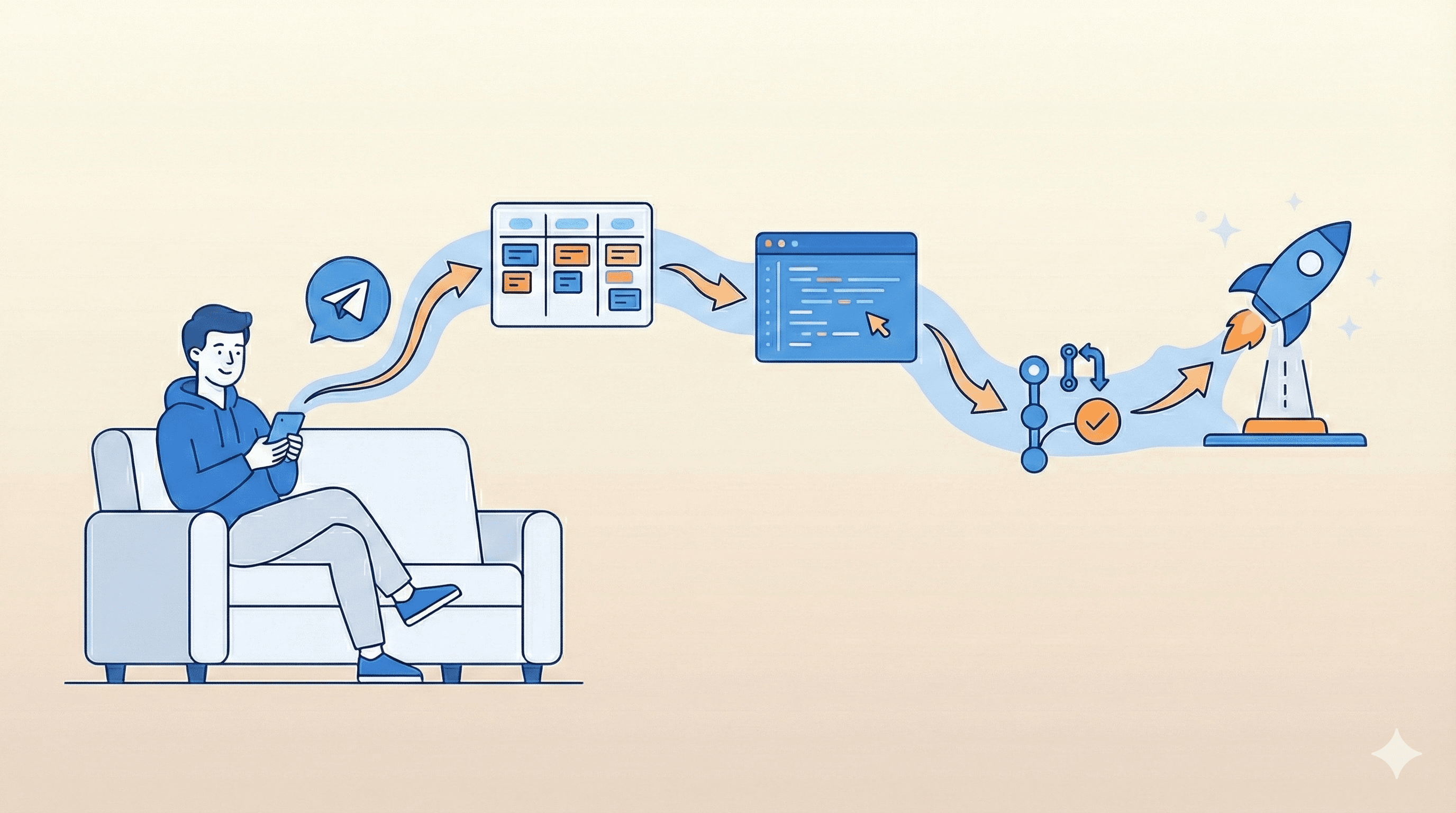
A project with code and no plan
I've been building RackHour, a marketplace connecting personal trainers with crossfit gyms. It's a side project, the kind that lives in a repo with ambitious code and no project management. No backlog, no prioritized features, no structured roadmap. Just code and ideas scattered across my head and random notes.
I knew what I wanted to build. I had a decent codebase. What I didn't have was a clear picture of where things stood: what was done, what was half-done, what was missing entirely. The kind of clarity you get from a product manager. I didn't have one of those either.
So I asked Claude Code to be one.
The AI code audit
I opened Claude Code and gave it a broad instruction: review the entire codebase, analyze what's implemented and what's not, and propose a development strategy. Features, stories, priorities.
What came back was surprisingly structured. Not perfect on the first pass, but the foundation was solid. We iterated over several sessions. I'd push back on priorities, refine scope, split features that were too large, merge ones that were too granular. It was exactly the kind of conversation I'd have with a product manager, except the product manager had already read every line of code in the project.
The planning was the hardest part, and the AI was better at it than I expected. Not because it had opinions about what to build. It doesn't. But because it could hold the entire codebase in context while I described what I wanted, and map my vision to what already existed. That's a skill most human collaborators need weeks to develop on a new project.
Connecting the pipeline
Here's where things got interesting. I connected Linear to Claude Code via MCP (Model Context Protocol). Linear is a project management tool for tracking issues, sprints, and roadmaps. Through the MCP connection, Claude Code got direct access to read and write to my Linear workspace.
Once I was happy with the backlog we'd refined together, I said: "Now create all these issues on Linear."
One command. Each story got a title, a detailed description, acceptance criteria, and a priority level. The backlog went from my head → Claude Code → Linear in a single session. Weeks of product planning, compressed into a few hours of conversation.
The moment it clicked wasn't when it wrote code. It was when it understood project structure. The AI wasn't just a coding tool anymore. It was a collaborator that could think about what needed to be built, why, and in what order.
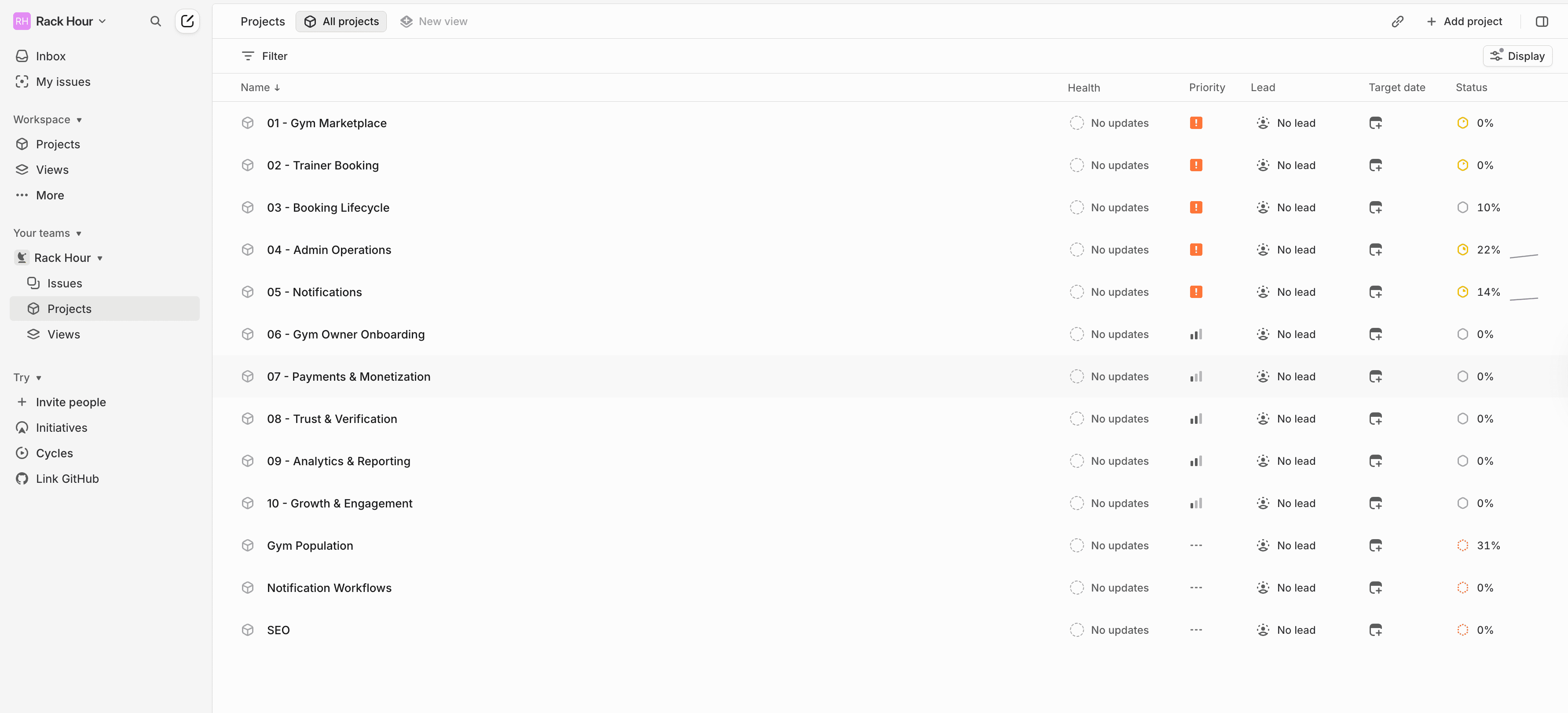
The backlog Claude Code created on Linear, with priorities and acceptance criteria
Implementation by reference
With a clean backlog in Linear, the development workflow became almost mechanical.
"Please implement user stories RAC-13, RAC-12, and RAC-11."
Claude Code reads the Linear ticket through the MCP connection, understands the context, the acceptance criteria, the priority. It looks at the existing codebase. And it starts building.
In the early days, we'd iterate. I'd need to confirm architectural decisions, flag edge cases, redirect approaches I disagreed with. But with each model improvement, from Claude 3.5 to 4.5 to 4.6, the first run got better. Today, most of the code is good on the first attempt. Sometimes I tweak, sometimes I redirect, but the bulk of the work lands correctly.
The workflow: pick a ticket → tell Claude Code → review the output → iterate if needed → done.
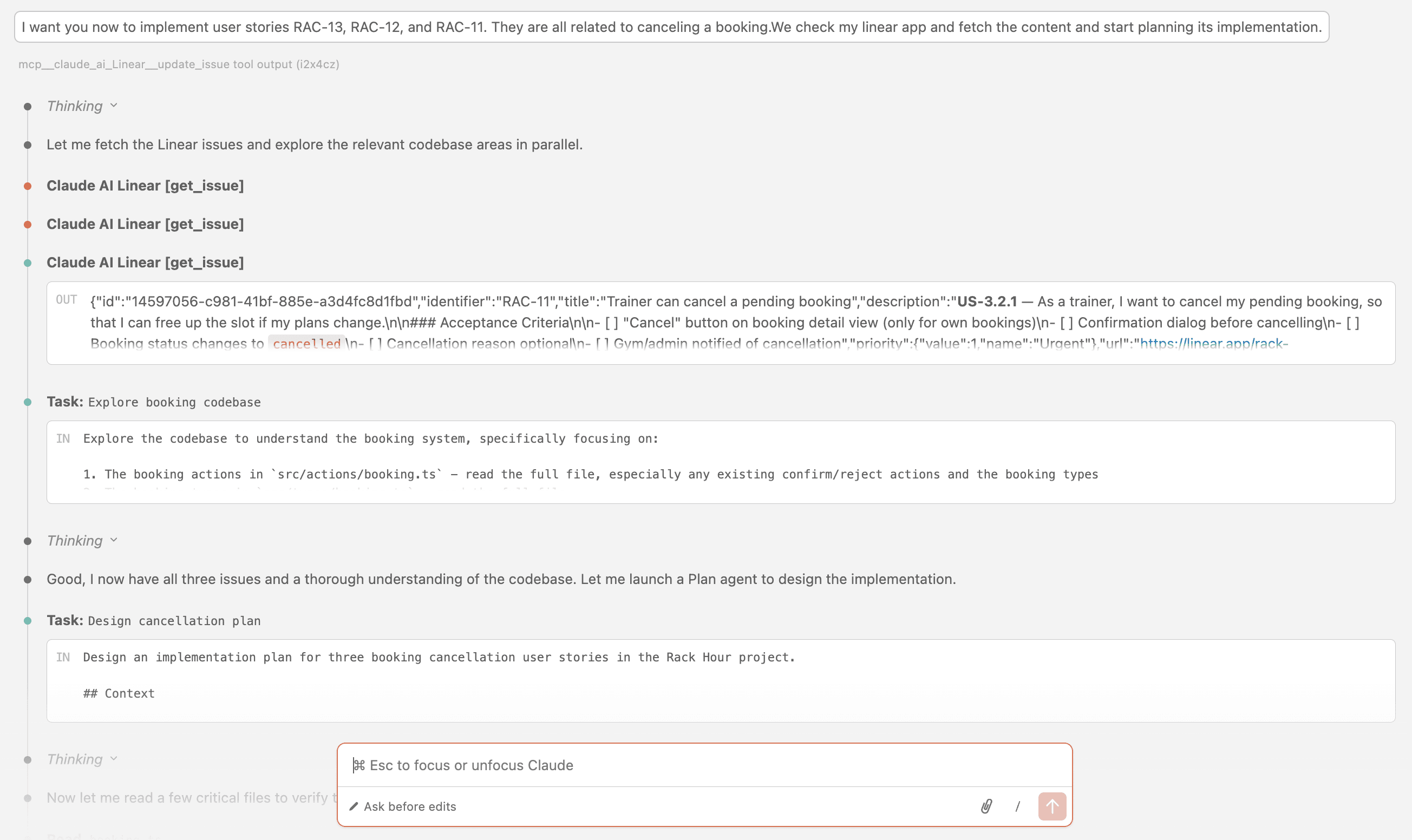
Claude Code reading Linear tickets and implementing them directly
I was shipping features without writing code. But I was still in my IDE, still in the loop for every ticket, still initiating every task. That was about to change.
Enter OpenClaw
A few weeks ago, the internet started buzzing about OpenClaw, an open-source autonomous AI agent powered by Claude Opus 4.6. Unlike Claude Code, which runs in your terminal and waits for you to drive, OpenClaw operates independently. It connects to Git, to project management tools, to databases. And you can interact with it from anywhere, including Telegram.
I was afraid of it.
Not abstractly afraid. Specifically afraid. This thing has real autonomy. It can push code to your repos, modify databases, create pull requests, and act on its own judgment. There are no training wheels by default. The first week after I heard about it, I didn't try it. Too risky. Too much could go wrong.
What changed was seeing others use it successfully, and understanding the isolation model. I installed OpenClaw on a separate server, completely isolated from my other infrastructure. I gave it access to nothing.
Then I started climbing the trust ladder.
The trust ladder
This is the part of the story that matters most.
I didn't go from zero to "implement my entire backlog" overnight. I went step by step, the same way you'd onboard a new team member. You don't give a junior developer production database access on their first day.
Step one: access to one repository. Read-only. I asked it to analyze the code, summarize components, identify potential issues. It did well. I gave it write access.
Step two: access to Linear. It could read my tickets, understand priorities, see what was planned. I started asking it to implement specific issues, one at a time. It created PRs. I reviewed them carefully.
Step three: access to a staging database. Read-only. It could query data, understand the schema, see what existed. This was useful for features that depended on data context.
Step four: I asked it to scrape information from the internet related to one of my projects and populate the staging database. It did, autonomously. It found the data, structured it, and inserted it. No hand-holding.
Step five: batch implementation. "Implement all the priority-zero tickets." Multiple PRs, created in sequence, each one properly scoped and described.
Each step followed the same pattern: test, validate, gain confidence, expand scope. No dramatic failures. No moments where I had to frantically revert something. Just gradual, consistent trust built through small, verifiable wins.
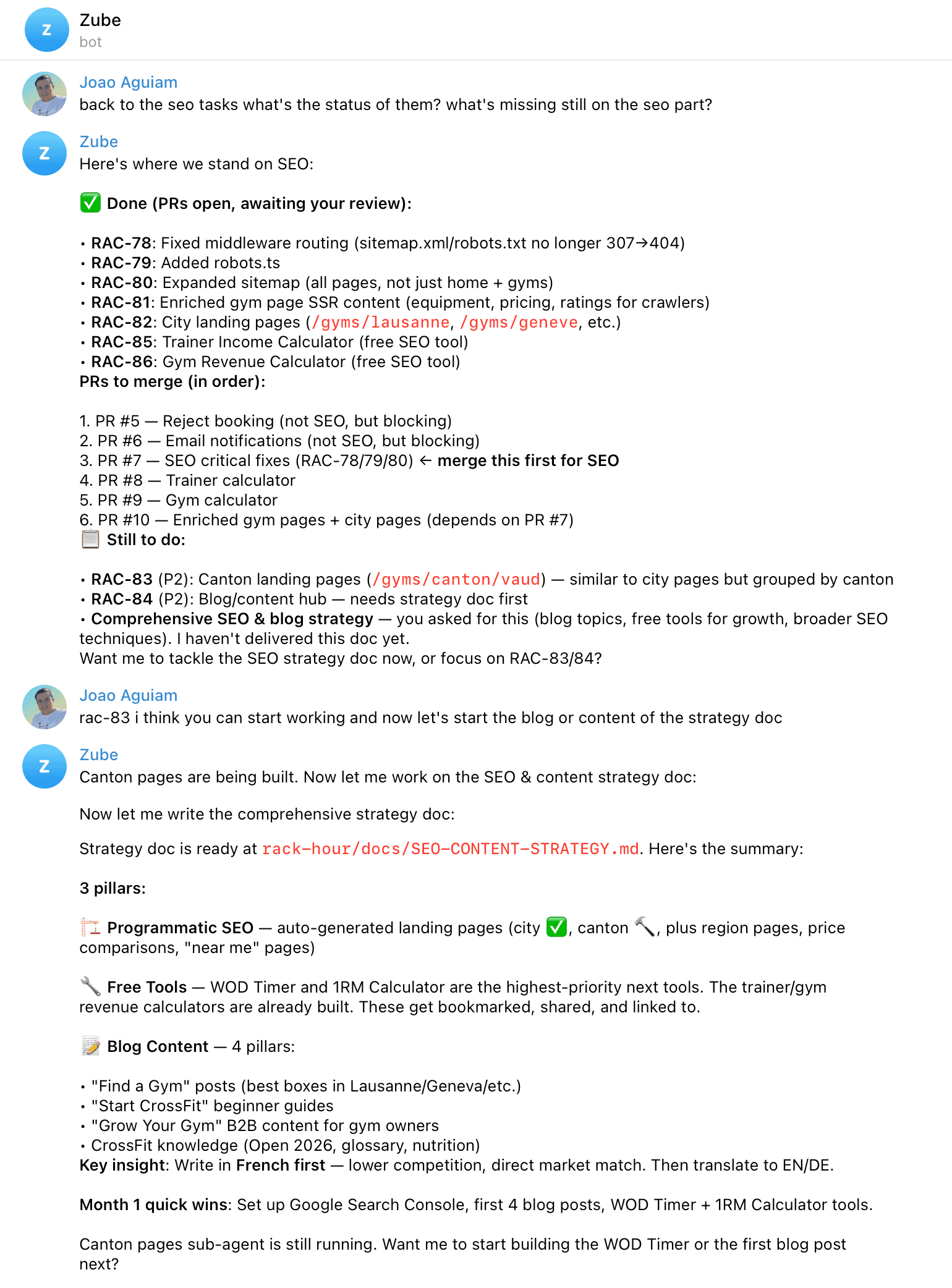
Interacting with OpenClaw from Telegram
The new workflow
Today, my development workflow looks nothing like what it was a month ago.
I have an idea. I send a message to OpenClaw on Telegram. Depending on what it is, OpenClaw either adds it to my Linear backlog for later, or starts implementing it immediately. When it's done, a pull request appears on GitHub. Because I have automatic preview deployments, I can test the feature immediately, on my phone, from wherever I am.
I review. I approve. It goes to production.
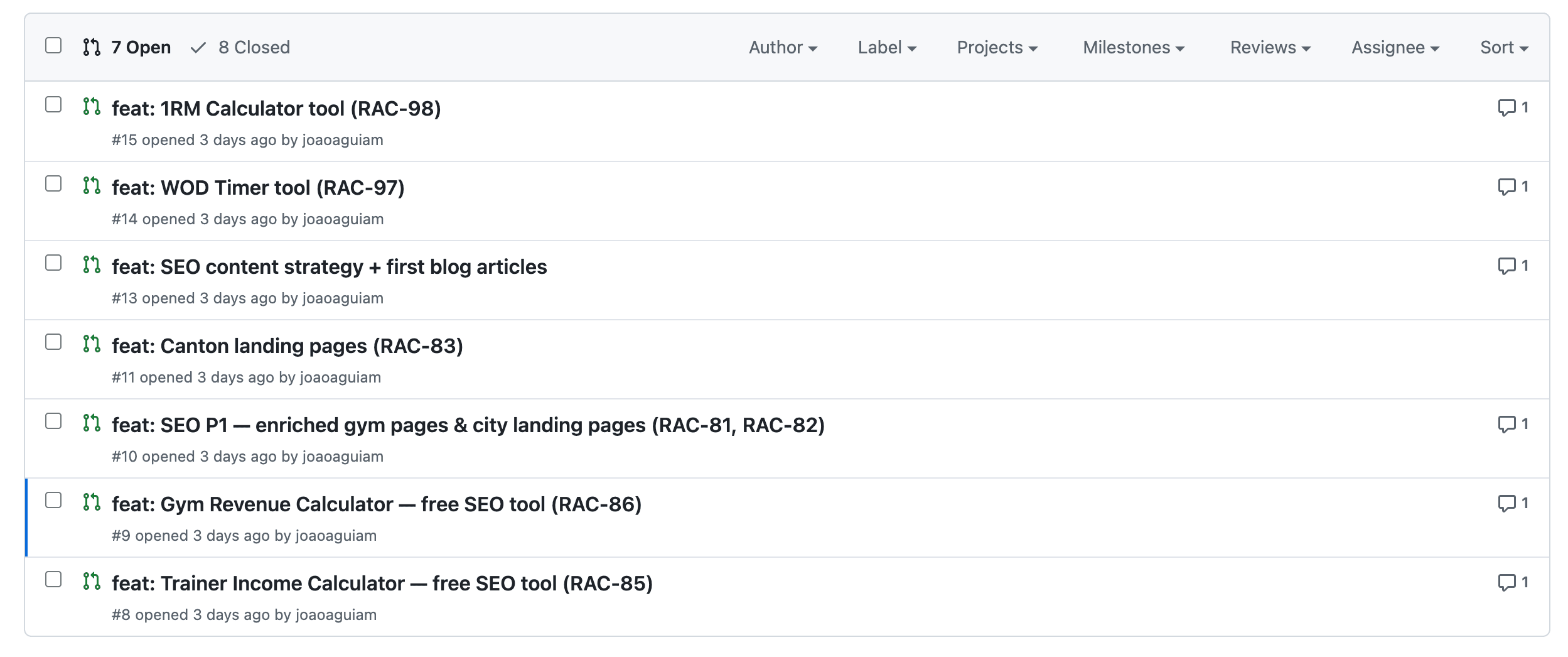
Pull requests created by OpenClaw, ready for review
I'm not a code writer anymore. I'm a product owner who reviews and approves. The code is there for me to read if I want, and sometimes I do for complex features. But most of the time, I test the behavior, not the implementation.
This shift is profound. My side project, which used to compete for the few hours a week I could sit at my desk and code, now moves forward from my phone while I'm on the couch, commuting, or waiting for my kids at school.
The tension
Here's what keeps me honest: the more comfortable I get, the more dangerous it becomes.
Not because the tools are unreliable. They've been remarkably consistent. The danger is in me. The less I look at the code, the less I understand the codebase over time. The more I delegate, the less equipped I am to catch subtle issues. There's a version of this story where I become so confident in the pipeline that I stop paying attention, and something breaks in a way I can't diagnose because I've lost the thread.
I don't have a clean answer for where the line is between productive delegation and dangerous complacency. Nobody does yet. We're all figuring this out in real time.
But I know the answer isn't to stop trying. The productivity gains are too significant. The ability to move a side project forward without being chained to a desk is too valuable. The quality of the output is, frankly, too good to ignore.
What's next
This isn't the end of the story. The pipeline I described still has a gap: I'm the one testing and validating every PR. That's the next piece I want to close.
Automated testing and validation. I want the agent to test what it builds, report exactly what it tested, and attach that evidence directly to the PR. If the tests pass and match my acceptance criteria, the agent can iterate on its own without waiting for me. I'd only step in for edge cases or when something looks off. I haven't fully implemented this yet, but it's the obvious next step.
SEO as a feedback loop. Right now, the agent implements SEO tasks from my backlog. But the backlog is static. I want to connect it to Google Search Console, feed it real analytics data, and let it close the loop: monitor performance, identify what's underperforming, propose changes, implement them. A continuous cycle where the agent doesn't just execute SEO strategy but adapts it based on real results.
Email outreach. One of my projects requires reaching out to potential partners. I don't want the agent sending emails on my behalf. Not yet. But I want it to prepare drafts, research contacts, structure the outreach, and have everything ready for me to review and send. The same trust ladder applies: start with drafts, validate the quality, gain confidence that the tone and content are right. Eventually, maybe I'll let it handle the initial outreach automatically. But that's a level of trust I haven't earned yet, and neither has the agent.
The pattern repeats. Each new capability starts with observation, moves to assisted execution, and only graduates to autonomy once the trust is there. The trust ladder doesn't end. It just gets taller.
What changed
Three weeks. That's all it took for my development workflow to transform from "I work with Claude Code on each task individually" to "I review pull requests from my phone."
The key was daring to try. Trying a new tool, seeing what it could do, and then pushing a little further. Each step revealed more value, which gave me more confidence, which made me explore more. A virtuous cycle that started with one small experiment and snowballed into a completely different way of working.
If you're curious but hesitant: start where I started. Use Claude Code to audit your codebase. Connect your project management tool. Let the AI create your backlog. Implement one ticket. Review it carefully. Then do another. And another. And when that feels natural, set up your own personal assistant. Give it one repo. Then two. Then your backlog. Keep iterating, keep expanding what it can do for you.
The trust builds itself, one small win at a time.
Things are changing fast. Weeks, not months. Keep trying, keep playing. Be cautious but not afraid. The world shifted, and it's not shifting back.