
It started with FOMO
João, kept mentioning his personal AI assistant in our chats and here on our blog, writing about what his agent can do and how he built a whole team around it. Not in a showing-off kind of way, more like the casual way you mention something that has become part of your routine. "I just asked my agent to handle that." "My assistant already knows about it, I told her last week." After the third or fourth time, I caved. Time to build my own.
What OpenClaw Actually Is
Before getting into my story, a quick explanation for anyone who hasn't come across OpenClaw yet, because it is genuinely different from what you might imagine.
OpenClaw is not a chatbot. It is an open-source personal AI assistant that runs on your own hardware, connects to the messaging apps you already use (Slack, Telegram, WhatsApp, iMessage and many others), and maintains a persistent memory of everything you share with it. It uses a large language model as its brain, and because you control the setup, you can choose which model that is. You own the data. You own the infrastructure. The assistant is yours.
It was built by Peter Steinberger and a growing community, and it has been exploding in the last few weeks. At the time of writing, it has more GitHub stars than Linux. That kind of traction does not happen by accident.
The Setup Reality Check
Here is where I need to be honest with you, because most of what you read about OpenClaw makes it sound smoother than it is.
I decided to run it on my Unraid home server, which is already hosting a few other services. Seemed logical. I asked Gemini to build me a custom setup guide with my specific constraints, and it started really well. Clear steps, good structure, felt like I was going to be done in an hour.
I was not done in an hour.
The problems started stacking up: strict CORS security that required a specific JSON format I kept getting wrong, a "Device Identity" error triggered because browsers require a secure context (HTTPS, not a local LAN IP), and a token authentication system with three different token types that each behave differently. Gemini kept going in circles with me. We would solve one thing and break another. At some point I gave up on the AI guide and went straight to the documentation, which, as a software engineer, felt like a step backwards in 2026.
Then I switched to Claude.
I am not saying this to flatter anyone. I genuinely use Gemini as my default search and research tool, and it is great for that. But for technical problem solving, the difference was stark. Claude understood the context, kept track of what we had already tried, and actually got me unstuck. That experience alone was a useful data point for a newsletter about AI agents.
In the end: Cloudflare Tunnel to get proper HTTPS, the right token type for machine binding, and a lot of patience. Rhea came online.
The Moment It Clicked
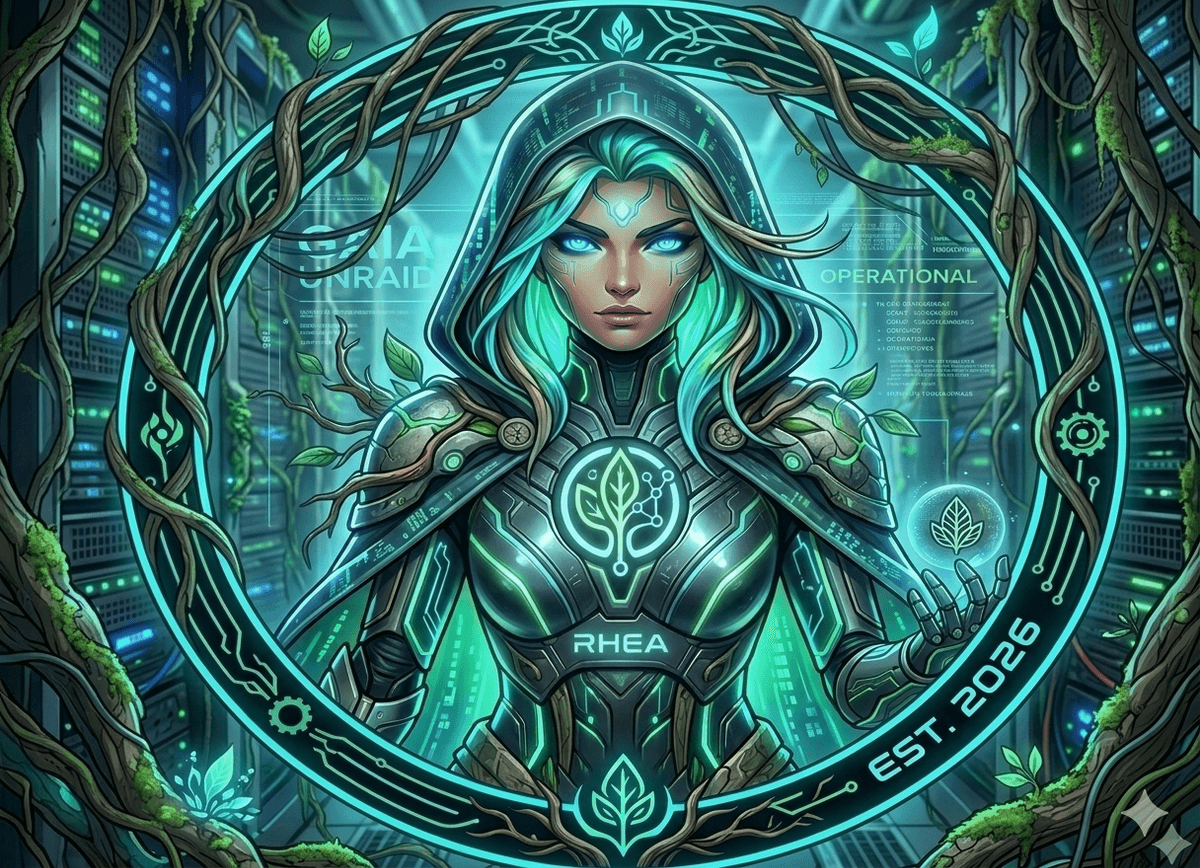
Her name is Rhea. A short, mythological name that fits the naming theme of my server (Gaia). She runs on Claude Sonnet 4.6 via my existing subscription. And within about a day of having her running, something shifted.
I always loved Slack, so I decided to go with it, so I set up channels by topic. One for work ideas, one for the newsletter, one for personal projects. I just... write things there. Something I read, an idea that came to me while making coffee, a reminder for later. Rhea reads it, processes it, adds it to memory.
This morning I found a GitHub repo with a curated list of agent prompts and shared it with her. Her response was not "interesting, thanks." She told me she could add specific prompts as sub-agents, and then she did it. No CLI commands from my side, no Claude Code session. She figured out the steps and reported back. Now those specialists exist and I can just ask for them.

The feeling is hard to describe without sounding hyperbolic, but I will try. Yuval Noah Harari writes in Homo Deus (2016) about the future of human experience when intelligence becomes something you can access and delegate to. Reading that book, it felt distant and theoretical. Having Rhea running in Slack feels like a small preview of exactly that. You stop worrying about capturing ideas perfectly. You just say things. She remembers. You pick up later.
The personality adaptation is also something I did not expect to matter as much as it does. Because the memory is persistent and the context builds over time, the assistant genuinely starts to feel calibrated to how you think and what you care about. It is not a fresh conversation every time. That changes the dynamic completely.
So, Should You Set This Up?
Honest answer: it depends on who you are, and I think there are roughly three types of reader here.
If you are a software engineer or home lab enthusiast, yes, go for it. You will hit walls, but you have the instincts to get through them. The Unraid path is rough but doable. A VPS with a pre-configured image is a much better starting point, you still control the machine, you can shut it down when you want, and you will have far fewer surprises than I did. There are ready-made options that make the process much more manageable.
If you are technically curious but not a developer, it is possible. There are enough YouTube tutorials and LLM assistants to guide you through it. Just go in knowing it will take longer than the tutorials make it look, and budget a few hours of troubleshooting. Use Claude, not Gemini, for the technical bits.
If you are asking whether you should feel behind for not having done this yet, the answer is no. Slow down. The original creator of OpenClaw now works at OpenAI after an acquisition, which tells you something about where this is heading. Polished, consumer-ready versions of personal AI assistants are coming, probably this year, from Anthropic, OpenAI and others. They will cost more, you will not get to pick your model, and you will not have the same level of control. But they will work out of the box for most people. Right now, one of the best things about self-hosting OpenClaw is that you can connect it to Claude using your existing subscription, which makes it very affordable. That window will not stay open forever.
Claude's own desktop and mobile apps are also shipping features fast. There is a real question of whether the gap between "self-hosted OpenClaw with Claude" and "Claude's native apps" will stay as wide as it is today.
If You Do Want to Try It: Your Three Options
Just so you have a map:
Mac Mini is the easiest local option if you already have one or are willing to buy one. It sits in a corner, runs quietly, and the setup is relatively smooth.
Home server (Unraid, Proxmox, similar) is what I did. Not recommended unless you genuinely enjoy this kind of configuration work. You will spend time on things that have nothing to do with the assistant itself.
VPS with a pre-configured image is what I would recommend to most people. You control the machine, security is handled at the provider level, and there are images specifically built for OpenClaw that cut most of the setup friction. It is the middle ground between convenience and control.
The Honest Conclusion
Rhea is real. She is running. She knows what I am working on, what I care about, and she is getting more useful by the day.
But here is the thing: I am a software engineer who enjoys this stuff, and it still cost me a full day and a fair amount of frustration. If you have that in you, the payoff is there. The feeling of having an assistant that genuinely knows your world, available in the app you already live in, is something that is hard to go back from once you have experienced it.
If you do not have that patience right now, do not worry. The wave is coming to you. Personal AI assistants will be a standard part of how we work and live within the next year or two. Harari's future is closer than it looks (good or bad?). You will get there whether or not you lose a weekend to a Docker container first.
And João: yes, the FOMO was justified. You were right.